Best Time to Perform Umrah: A Complete Guide
Comparing every season for crowds, cost, weather and spiritual significance so you can choose what matters most to you.
There's No Single "Best" Time Only What's Best for You
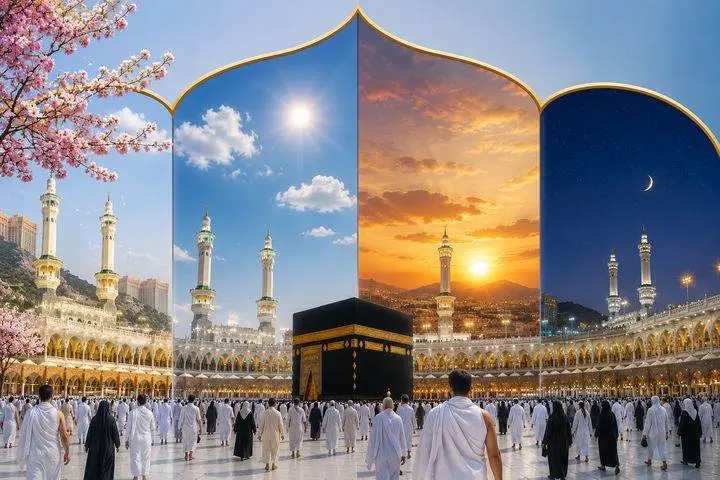
This is genuinely the most honest way to frame this question. Umrah can be performed at any time of year, and each season offers a different combination of spiritual significance, weather, crowd levels, and cost. Rather than chasing a universal "best" answer, the right approach is understanding what each period actually offers, then weighing that against your own priorities whether that's spiritual timing, comfort, budget, or simple schedule availability.
Ramadan: Maximum Spiritual Reward
The Prophet Muhammad ﷺ is reported to have said that performing Umrah during Ramadan carries reward equivalent to performing Hajj making this the most spiritually significant time of year for many pilgrims. The atmosphere is genuinely unique: nightly Taraweeh prayers, communal Iftar near Haram, and the heightened devotion of an entire city collectively fasting and worshipping together. The trade-off is real, though: this is also the most crowded and most expensive period of the year, with the last ten nights specifically seeing the most intense demand as pilgrims seek Laylat al-Qadr. See our dedicated Ramadan Umrah Packages page for full details.
December: Comfortable Weather, Moderate Crowds
December offers some of the most comfortable weather of the year in Saudi Arabia, with daytime temperatures typically ranging 18-25°C a significant relief compared to summer's extreme heat. December also conveniently aligns with Pakistani school winter holidays, making it one of the most popular months for family travel specifically. Pricing and crowding sit at a moderate level busier than the quietest off-peak months, but considerably calmer and more affordable than Ramadan. Our December Umrah Packages page covers this season in detail.
Summer Months (June August): Lowest Crowds, Highest Heat
Saudi Arabia's summer months bring genuinely extreme heat, often exceeding 40°C, which makes the walking-intensive parts of Umrah considerably more physically demanding, particularly for elderly pilgrims or those with health conditions affected by heat. The trade-off is generally lower crowd levels and more affordable pricing outside of any overlapping Islamic holiday periods, making summer a reasonable choice specifically for younger, healthier pilgrims prioritizing lower cost and fewer crowds over physical comfort.
Other Islamic Calendar Considerations
Beyond Ramadan, certain other periods on the Islamic lunar calendar see moderate increases in Umrah demand particularly the weeks surrounding Rabi-ul-Awwal (associated with the Prophet's ﷺ birth) and various other significant dates observed by different communities. These periods are generally less extreme in crowding than Ramadan but worth being aware of if your travel dates happen to overlap with them.
Comparing Seasons at a Glance
| Season | Crowd Level | Weather | Relative Cost |
|---|---|---|---|
| Ramadan (last 10 nights) | Very High | Varies by year | Highest |
| Ramadan (first/mid) | High | Varies by year | High |
| December | Moderate | Comfortable, mild | Moderate |
| Summer (Jun-Aug) | Low | Extremely hot | Lower |
| General off-peak | Low-Moderate | Variable | Lowest |
Choosing Based on Who's Traveling
Your ideal timing also depends significantly on who's traveling with you. Elderly pilgrims or those with health conditions generally fare best avoiding both extreme summer heat and the densest Ramadan crowds, making December or general off-peak months often more suitable. Families with school-age children naturally gravitate toward December or summer school holiday windows. Pilgrims prioritizing spiritual significance above all else often choose Ramadan despite the crowds and cost, viewing the added difficulty as part of the spiritual undertaking itself.
Booking Lead Time by Season
Whatever season you choose, lead time matters. Ramadan requires the earliest booking 8-12 weeks ahead, more for the last ten nights specifically. December benefits from 4-6 weeks lead time given school holiday demand. General off-peak months offer the most flexibility, sometimes bookable within 3-4 weeks of travel given lower overall demand on hotels and flights during these periods.
Weather Considerations Beyond Temperature
Beyond raw temperature, it's worth considering humidity and seasonal weather patterns specific to the Hejaz region where Makkah and Madina are located. While generally arid, occasional rainfall can occur during winter months, and dust storms are more common during certain transitional seasons. None of these factors should discourage travel during any particular month, but packing appropriately including a light jacket for cool December evenings, or sun protection for any season makes a meaningful difference to overall comfort regardless of when you travel.
Repeat Pilgrims: Varying Your Timing Year to Year
Pilgrims who perform Umrah more than once often deliberately vary their timing across different visits, experiencing the unique atmosphere of Ramadan on one trip and the calmer, more contemplative pace of an off-peak month on another. This variation offers genuinely different experiences of the same sacred spaces the energetic, communal intensity of a packed Haram during Ramadan feels meaningfully different from the quieter, more spacious experience of worship during a low-season visit, and many repeat pilgrims come to value both for different reasons.
Making Your Final Decision
If you're still undecided, ask yourself honestly which factor matters most to you personally: spiritual significance (choose Ramadan), weather comfort and family scheduling (choose December), lowest cost and crowds (choose summer or general off-peak), or simply whatever fits your available leave from work. There's no wrong answer here every season offers a complete, meaningful Umrah experience, and our team is happy to discuss your specific priorities over WhatsApp to help narrow down the right timing for your situation before you commit to a specific package.
Avoiding Decision Paralysis
It's worth noting that no timing choice is irreversible in the broader sense many pilgrims perform Umrah multiple times over their lives, meaning choosing a "good enough" time for your first or next trip doesn't close off the possibility of experiencing a different season on a future visit. Don't let the search for a theoretically perfect time delay a trip you're otherwise ready and able to take.
Related Reading
Related Umrah planning: For better planning, compare first-time Umrah guide, review complete Umrah checklist, check current Umrah costs in Pakistan, and read how to choose an Umrah travel agency before confirming your booking.
Travel information reviewed by: Muhammad Qasim, Owner | Travel Consultant: Faisal Jabbar | Operations Manager: Shakir Khan | Licensed Pakistan Tour Operator, Licence No. 9883 | Last reviewed: October 2026